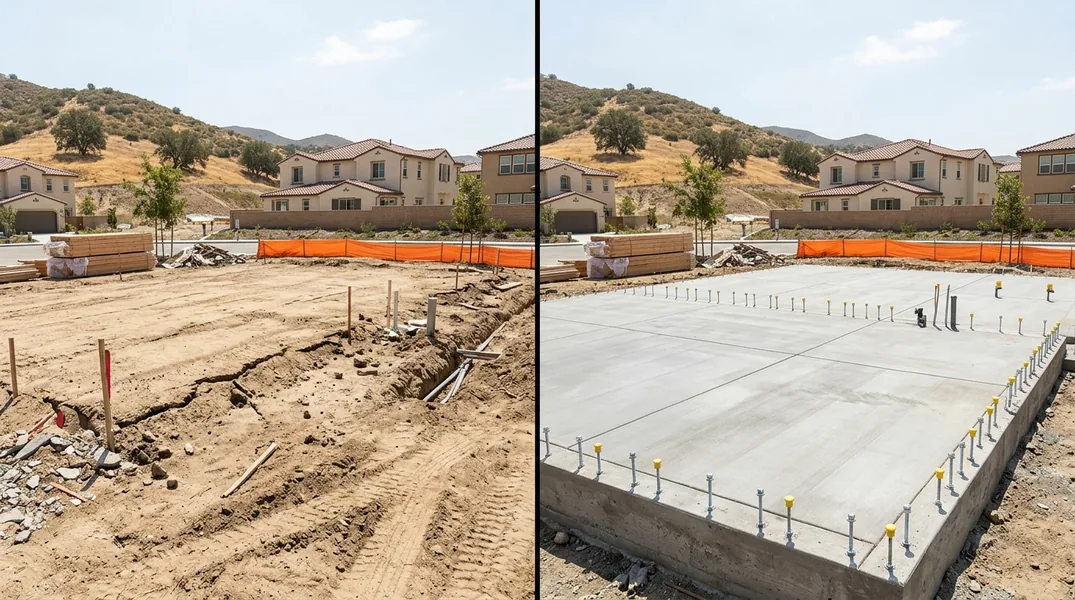
Understanding New Construction Concrete Slabs in Santa Clarita
Buying a newly built home in Santa Clarita is an exciting milestone, but the concrete foundation beneath your future home deserves serious attention before you sign on the dotted line. A new construction concrete slab is more than just a surface to build upon; it's a critical structural component that will support your entire home for decades to come. Understanding what makes a quality slab and what potential issues to watch for can save you tens of thousands of dollars in repairs down the road.
The concrete slab in new construction serves multiple purposes. It provides the foundation for the home's structural integrity, supports the weight of walls, appliances, and furnishings, and helps protect against moisture infiltration from the ground. In the Santa Clarita area, where soil conditions and weather patterns can vary significantly between neighborhoods, the quality of the initial slab installation is paramount. Many homebuyers focus on finishes and aesthetics during the walkthrough, but the foundation is where your investment truly begins.
Key Areas to Inspect During Your Builder Foundation Inspection
Before closing on your new home, you have the right to conduct a thorough builder foundation inspection. This is not optional; it's one of the most important steps in the home purchase process. Start by examining the slab surface for visible cracks, which are common in new concrete as it cures and settles. However, not all cracks are created equal. Hairline cracks (less than 1/8 inch wide) are typically normal and expected in concrete, but wider cracks or those that continue to grow may indicate underlying problems such as improper curing, poor soil preparation, or structural issues.
Walk the entire perimeter of the foundation and look for signs of settling, heaving, or unevenness. Use a straightedge or level to check for significant deviations in the slab surface. Pay particular attention to areas near doors, windows, and where the foundation meets the stem wall. Check for water stains, efflorescence (white powdery deposits), or signs of moisture that might suggest drainage problems. Inspect the foundation walls for cracks, bowing, or separation from the slab. Don't hesitate to ask your builder's representative questions about any anomalies you notice, and request documentation of the concrete mix design, curing time, and soil testing reports that should have been conducted before the slab was poured.
New Home Foundation Warranty: What You Need to Know
Every new home comes with a new home foundation warranty, but understanding the specifics of your coverage is essential. Most builder warranties cover structural defects for one year from the date of closing, though some builders offer extended coverage for up to ten years on structural elements. However, these warranties typically have exclusions and limitations that homeowners often overlook. For example, many warranties do not cover cosmetic cracking, minor settlement, or issues that result from inadequate maintenance or improper use of the home.
Before closing, request a copy of your warranty documentation and read it carefully. Pay attention to the definition of what constitutes a structural defect, the process for filing a claim, and any exclusions that might apply. Some warranties require you to notify the builder of issues within a specific timeframe, so document everything with photos and dates. Ask your builder which defects are covered and which are not, and get their answers in writing. If you discover foundation issues after closing, contact your builder immediately and document your communication. Many builders are willing to address legitimate foundation problems during the warranty period, but you must follow their procedures and timelines to maintain your coverage.
Common New Construction Slab Problems and Red Flags
Several issues can plague new construction concrete slabs if they're not installed or cured properly. One of the most common problems is inadequate site preparation. If the soil beneath the slab wasn't properly compacted or if fill material wasn't graded correctly, the foundation can settle unevenly, causing cracks and structural stress. Another frequent issue is improper concrete mix or inadequate curing time. Concrete needs time to cure properly, and weather conditions during and after pouring can significantly affect the final product. If the builder rushed the process or didn't account for temperature and humidity, the slab may be weaker than it should be.
Watch for signs of moisture problems, which can develop if the vapor barrier beneath the slab was damaged during installation or if drainage around the foundation is inadequate. Staining, discoloration, or the smell of moisture in the crawl space or basement are red flags. Additionally, be alert to diagonal cracks that radiate from corners or openings, as these often indicate foundation movement or settling. If you notice any of these issues during your inspection, do not close on the home until the builder has addressed them. It's much easier to negotiate repairs before closing than to fight with a builder afterward. If you're unsure about what you're seeing, consider hiring an independent foundation inspector or structural engineer to evaluate the slab before you commit to the purchase.
When to Call a Professional: Foundation Concerns After Closing
If you've already closed on your new home and you're noticing foundation issues, don't panic, but do act quickly. Contact your builder's warranty department immediately and document everything with photographs and written descriptions. Keep records of all communication, including dates, times, and names of people you speak with. If the builder disputes your claim or refuses to address the issue, you may need to hire an independent structural engineer to assess the damage and provide expert testimony about the cause.
For more complex foundation issues or if you need repairs beyond the builder's warranty coverage, professional concrete contractors in the area can help. If your foundation requires Concrete Repair & Resurfacing, it's important to work with experienced professionals who understand the specific soil and climate conditions of the Santa Clarita area. Santa Clarita Concrete specializes in foundation assessment and repair for both new and existing homes. If you have concerns about your new construction slab, we recommend reaching out for a professional evaluation. You can contact us at (661) 528-6456 or request a free estimate to discuss your specific situation.
Steps to Take Before Closing: Your Foundation Checklist
Create a comprehensive checklist before your final walkthrough and closing date. Schedule your foundation inspection at least one week before closing so you have time to address any issues with the builder. Bring a flashlight, a level, a straightedge, and a measuring tape. Take detailed photographs and video of the entire foundation, including the slab surface, foundation walls, and any areas of concern. Note the date, time, and weather conditions during your inspection, as these details can be relevant if issues arise later.
Request and review all documentation related to the concrete slab, including the concrete mix design, testing reports, curing documentation, and any inspections performed by the builder's quality assurance team. Ask the builder to walk you through the foundation and explain their construction process, material specifications, and warranty coverage. If you have any doubts or concerns, hire an independent inspector before closing. This small investment now could save you from inheriting expensive foundation problems. Once you've completed your inspection and addressed any concerns, you can close with confidence knowing that your new home's foundation has been thoroughly evaluated. For questions about foundation quality or if you need professional guidance, Santa Clarita Concrete is here to help with expert advice and solutions.
Looking for a professional concrete contractor in Santa Clarita? Santa Clarita Concrete responds fast for all your concrete needs.
Get a Free QuoteOur services: Concrete Driveways · Concrete Patios · Stamped & Decorative Concrete